

The 2025 Middlestump End-of-Year Awards ceremony has crowned the continent's cricket elite, recognising outstanding performances, transformative contributions, and innovations that shaped African cricket throughout the year. Organised by TheMiddleStump, Africa's premier cricket recognition platform, this year's awards highlighted not just individual brilliance but systemic progress across grassroots development, institutional innovation, and competitive achievement.
Outstanding Player Recognition
Nigeria's cricket ecosystem demonstrated remarkable depth with two of the most coveted individual awards. Kehinde Amusa claimed both the Women's Player of the Year and Young Player of the Year titles. A distinction reflecting her extraordinary early career trajectory. At just 19 years old, Amusa has already established herself as a versatile all-rounder for Nigeria's senior women's team. Her debut in the 2025 Kwibuka T20i tournament showcased technical maturity beyond her years; she contributed 23 runs off 28 deliveries while capturing two wickets for seven runs against Sierra Leone. More significantly, Amusa's performances in the ICC Women's Under-19 T20 World Cup in Malaysia demonstrated her ability to perform under international pressure, helping the Junior Female Yellow Greens achieve a historic upset victory against reigning senior Women's World Cup champions New Zealand.
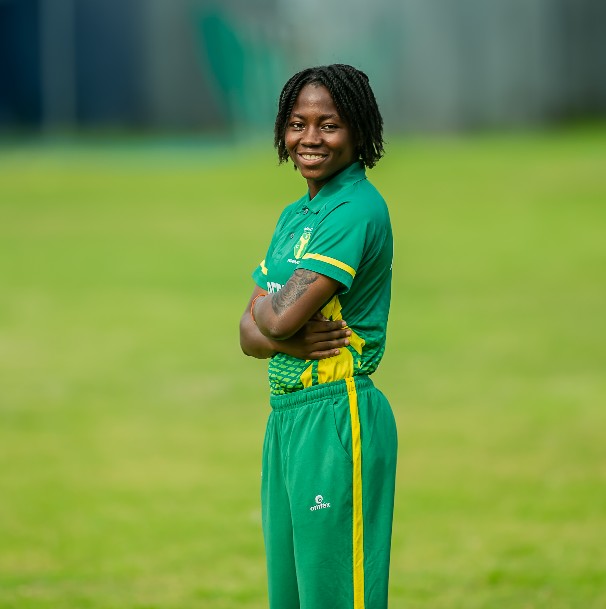
Isaac Danladi earned Men's Player of the Year honours, cementing his status as one of Africa's most consistent all-rounders. The 22-year-old left-handed batter and orthodox spinner has amassed 23 T20 International appearances, scoring 348 runs at an average of 19.33 with a strike rate exceeding 105. His bowling economy of 4.89 over 16 wickets demonstrates control and efficiency in the shorter format. Danladi's recent performances, including a Player of the Match award for a 64-run, 35-ball contribution, underscore his emergence as a cornerstone player for Nigeria's competitive ambitions.

The Best Cricketing Moment: Nigeria's Seismic Upset
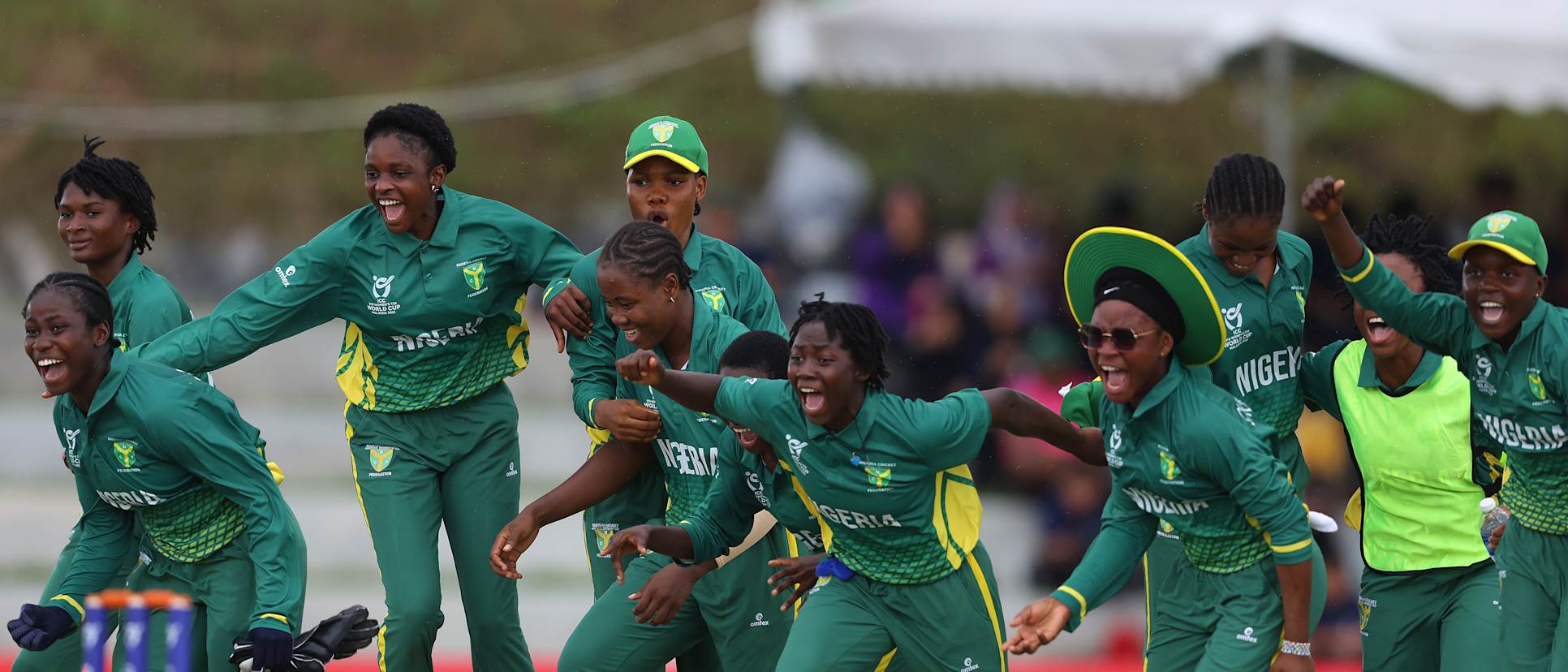
The award for Best Cricketing Moment of the Year recognised Nigeria's Female U19 World Cup Victory Against New Zealand—a result that reverberates beyond the scoreline. In a rain-reduced 13-over contest in Kuching, Malaysia, Nigeria posted 65 for six, which proved decisive when New Zealand managed only 63 for six in response. This victory assumed outsized significance not merely for the two-run margin but for what it represented: Nigeria's maiden appearance at the ICC Women's U19 T20 World Cup and a statement victory over the reigning senior Women's World Cup champions. The upset catalysed broader recognition of Nigeria's cricket ascendancy, demonstrating that the nation's investment in grassroots pathways and youth development was yielding world-class talent ahead of schedule.
Administration and Officiating Excellence
The administrative architecture supporting cricket's growth received explicit recognition. Femi John received the Administrator of the Year award, acknowledging his role as South South geopolitical zone representative for the Nigeria Cricket Federation. John's contributions span team management, federation operations, and development initiatives that ensure cricket's institutional foundation remains robust as competitive performance accelerates.

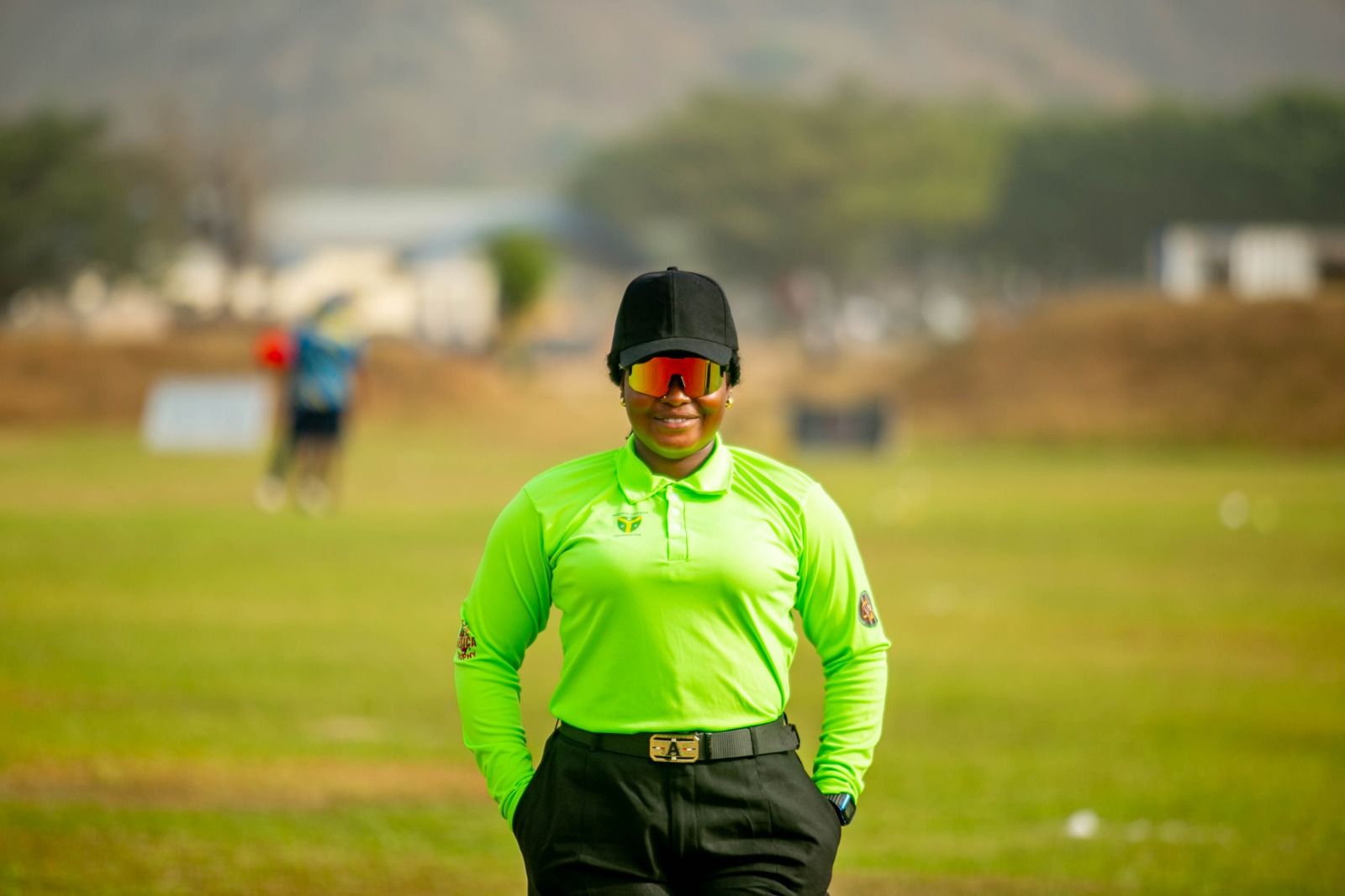
Temitope Onikoyi was honoured as Umpire of the Year—a recognition that carries particular significance for African cricket. At 28 years old, Onikoyi holds Cricket South Africa Level Two and ICC Level One umpire certifications; and has officiated nine T20 International matches between 2021 and 2025. Her continued elevation in international cricket signals meaningful progress toward gender equity in umpiring, one of cricket's last male-dominated sanctuaries. Beyond statistics, Onikoyi's mentorship of emerging female umpires reflects the institutional mindset required to transform cricket's governance infrastructure.
Grassroots Development and Continental Impact
The awards elevated infrastructure and development organisations to equal prominence with individual players—a philosophical stance that recognises cricket's ecosystem nature. Northern Cosmopolitan Cricket Academy received Special Recognition for Contributions to Grassroots Cricket. Based in Abuja at the Moshood Abiola National Stadium, the academy was founded in 2022 by Coach Oke Jamal with an explicit mission to develop cricket in Nigeria's northern region. Operating Monday through Thursday, 2:30 pm to 4:30 pm, the academy has created transparent pathways from grassroots participation to national team selection, with young athletes competing in tournaments where NCF selectors identify talent for higher development tiers.?

The Pan African Youth Development Award went to Soroti Cricket Academy in Uganda, recognising transformative infrastructure investment in Eastern Africa. SCA recently completed the installation of state-of-the-art batting nets—a milestone that addressed years of logistical constraints. Previously, promising young cricketers required expensive travel to Lugogo to access quality practice facilities, a burden that limited training frequency and created economic barriers. The new nets, enabled through partnership with Cricket Uganda and community fundraising during the 2025 Soroti Cricket Academy Carnival, fundamentally altered the academy's development model. Players now train consistently at home, with resources redirected from transport toward coaching, equipment, nutrition, and competition. The academy's track record—producing multiple players for Uganda's national teams, including Victoria Pearls squad members—validates the investment's return.

Lifetime Recognition
Cricket Builds Hope (Rwanda), under the stewardship of William Hammond, received the Lifetime Service Award—recognition of a decade-long commitment to using sport for social transformation. Evolved from the Rwandan Cricket Stadium Foundation's effort to build the nation's first dedicated cricket ground, Cricket Builds Hope operates from the iconic Gahanga Cricket Stadium as a hub for social development programming.
The organisation extended cricket into refugee camps, most notably Mahama in southeastern Rwanda, where it delivered cricket instruction to over 200 Burundian children with no prior exposure to the game. Beyond sport, Cricket Builds Hope coordinates leadership workshops, sexual and reproductive health education, financial literacy programs, and entrepreneurship training for marginalised women aged 16-25. Partnerships with organisations like NIUM and Cricket Without Boundaries amplified reach, while female ambassadors Mary Maina and Cathia Uwamahoro modelled pathways from cricket to professional opportunity and personal agency. The organisation's work in post-genocide Rwanda demonstrates cricket's capacity to foster reconciliation, gender equality, and hope. In 2025, CBH transferred full ownership of the Gahanga Cricket Stadium to the Rwanda Cricket Association
Innovation in Cricket Investment: The Cricket Lab
The award for Innovative Approach to Investing in Cricket honored The Cricket Lab—a modern indoor facility that launched at Tafawa Balewa Cricket Oval on Lagos Island in March 2024. The facility addresses a fundamental constraint limiting Nigerian cricket development: weather dependency and inconsistent training venues.

Located on Mission Street, The Cricket Lab provides three indoor batting lanes equipped with state-of-the-art bowling machines, video analysis technology, and professional coaching infrastructure. This enables intensive training sessions year-round, eliminating the seasonal interruptions that previously constrained player development. The integrated academy program, complemented by changing rooms, sports cafe, and a lounge overlooking both indoor and outdoor pitches, creates a community hub embedding cricket culture within Lagos's sporting fabric.
The innovation lies in model design: by strategically locating quality infrastructure at a recognised venue, embedding professional coaching, installing technology previously inaccessible to Nigerian players, and aligning operations with NCF development pathways, The Cricket Lab compressed the distance between grassroots enthusiasm and elite readiness. The facility's 2024 opening coincided with Nigeria's accelerating cricket competitiveness, demonstrating that access to modern training conditions meaningfully improved international player preparation
Fan Engagement
Funmilayo Omoniyi was recognised as Fan's Fan of the Year, celebrating the passionate cricket community member whose support transcends casual viewership. Omoniyi's consistent engagement with Nigerian cricket—from social media advocacy to event participation—exemplifies the fanbase whose energy sustains sport during both celebrated victories and challenging periods.

Coach of the Year: Friday Udoh
Friday Udoh earned Coach of the Year honors, recognizing a career trajectory that bridges elite playing experience and transformative grassroots development work. Udoh's playing credentials are substantial—he represented Nigeria at different age-grade competitions, accumulating competitive experience at the international level. His transition from player to coach reflects a common pattern among cricket's most effective mentors: technical understanding developed through personal competition, refined through systematic coaching study and certification.?
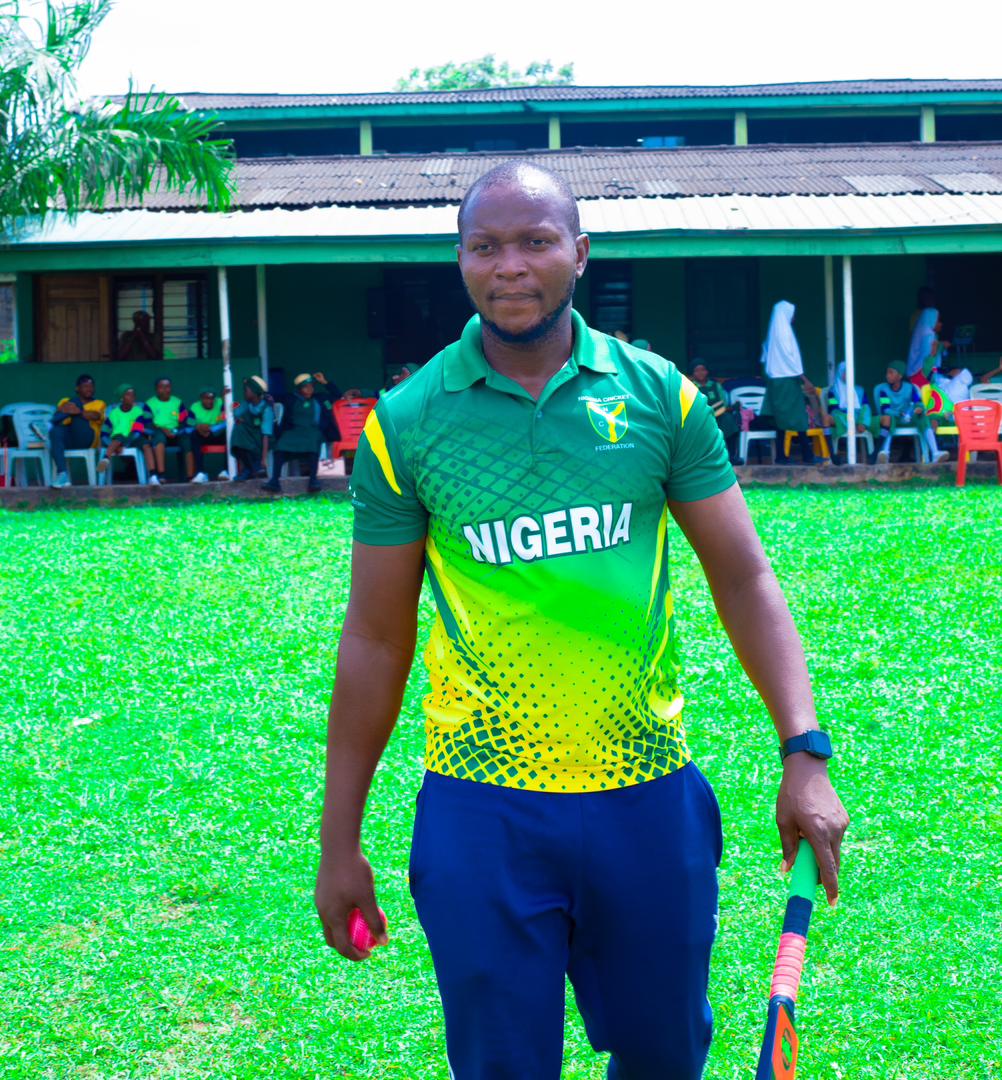
Currently serving as NCF Development Officer for Lagos State, Udoh operates at the convergence of institutional development and community engagement. His role positions him to identify emerging talent within Lagos's cricket ecosystem while simultaneously building coaching capacity across schools and community clubs. In 2025, Udoh collaborated with partner organizations on mass participation programs at the University of Lagos, working alongside LSCA officials to expand cricket access among young players.
The award reflects Udoh's contribution to Nigeria's coaching pipeline—the human infrastructure required to sustain competitive advancement. As individual players like Kehinde Amusa and Isaac Danladi mature into international contributors, coaches like Udoh quietly build the next generation, ensuring that temporary peaks transform into sustained excellence. His recognition at the national level signals the federation's commitment to developing indigenous coaching talent rather than perpetual reliance on foreign expertise.
Context and Significance
The 2025 Middlestump Awards operated against a backdrop of unprecedented African cricket momentum. Nigeria's U19 Women's team, in their inaugural World Cup appearance, defeated both New Zealand and Ireland, securing third place in their Super Six group and earning automatic qualification to the 2027 tournament. These performances vindicated a years-long NCF strategy emphasising school-based talent identification, infrastructure modernisation, and long-term athlete development. The federation's ambition to introduce 250,000 children to cricket through grassroots programming received tangible institutional support, visible in expanded facilities across multiple states—Tafawa Balewa Square and High Performance Centre in Edo State, university grounds in Lagos, school facilities in Akwa Ibom, and training ovals across the northern region.
The awards' breadth—spanning players and administrators, coaches and umpires, grassroots academies and research institutions, individual brilliance and organisational innovation—reflects contemporary cricket's complexity. No single award suffices to explain continental development; instead, recognition distributed across ecosystem actors acknowledges that sustained competitive progress requires simultaneous excellence in talent identification, institutional governance, rule application, coach development, community engagement, and evidence-based innovation.
As African cricket enters 2026, the 2025 Middlestump Award winners represent the multidimensional foundation upon which further progress will rest: emerging athletes like Kehinde Amusa embodying technical excellence; established performers like Isaac Danladi anchoring consistency; administrators and umpires like Femi John and Temitope Onikoyi professionalizing governance; grassroots organizations like Northern Cosmopolitan Cricket Academy and Soroti Cricket Academy broadening participation; development organizations like Cricket Builds Hope demonstrating sport's social power; and partners like The Cricket Lab leveraging innovation to compress performance learning curves. Together, they illustrate a continent where cricket has transitioned from aspirational to systemic—embedded in schools, supported by professional governance, and transformative purpose beyond sport itself.